 MEIKAI
What is generative engine advertising (GEA)?
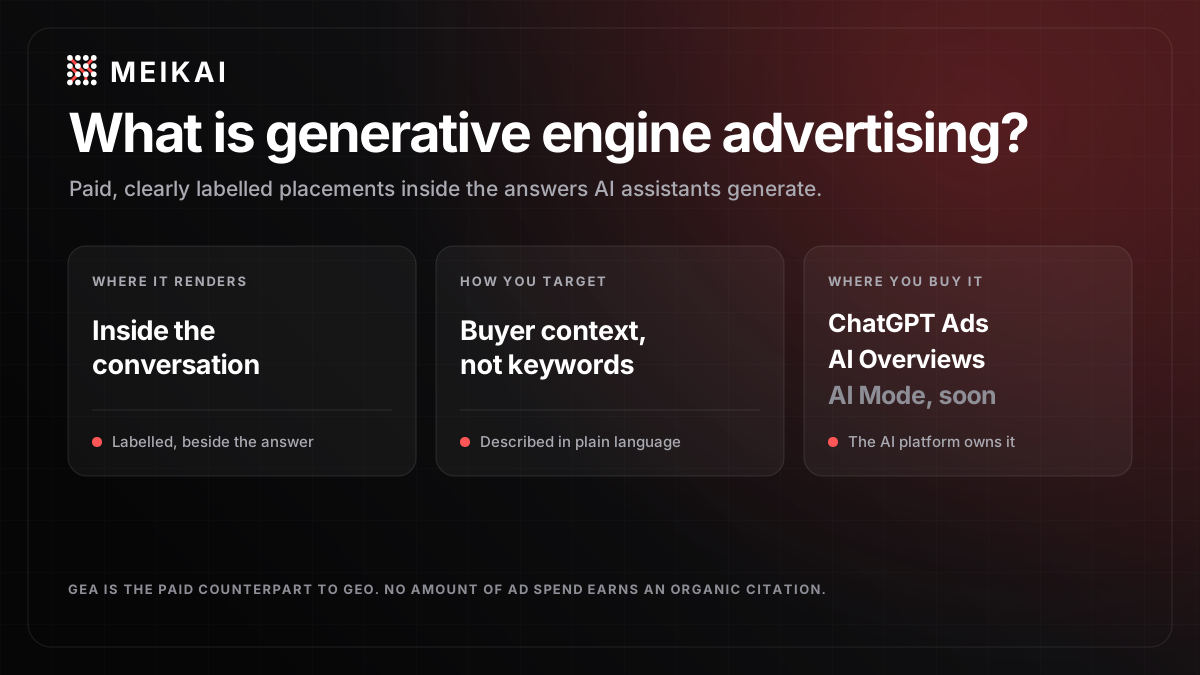
Generative engine advertising (GEA) is paid, clearly labelled advertising placed inside the answers AI assistants generate. Instead of bidding on a keyword to sit beside a list of links, you buy a slot inside a conversation, next to an answer a model wrote for one person. GEA is the paid counterpart to generative engine optimisation, in the same way search engine advertising is the paid counterpart to SEO.
The channel became real in 2026. OpenAI opened ChatGPT advertising with an auction, campaign reporting and conversion measurement. Google carries ad formats around AI Overviews and has been extending them into AI Mode. This page covers what GEA is, where you can buy it, how targeting and pricing work and how it differs from two things it gets confused with.
Updated 4 August 2026. Availability and formats in this category change monthly. Check each platform’s current documentation before planning a budget.
How GEA relates to SEO, SEA and GEO
Four acronyms describe one grid: two channels, each with an organic and a paid side.
| Channel | Organic | Paid |
|---|---|---|
| Traditional search | SEO: rank a link on a results page | SEA: buy a placement against a keyword |
| AI answers | GEO: earn a citation inside the answer | GEA: buy a labelled placement beside it |
One distinction matters commercially. A citation is evidence that a model reached for your content while composing an answer. An impression means you bought a slot. OpenAI states that ads in ChatGPT are labelled, rendered separately from the answer and do not influence organic responses. No amount of GEA spend earns you a GEO citation.
Where you can buy generative engine advertising today
| Surface | What you can buy | Status |
|---|---|---|
| ChatGPT | CPM campaigns for reach and CPC campaigns optimised toward clicks, in a relevance-weighted second-price auction | Live in the US, Canada, Australia and New Zealand. UK, Japan, South Korea, Mexico and Brazil rolling out |
| Google AI Overviews | Standard Search, Shopping and Performance Max formats above and below the AI summary | Live, served through campaigns you may already run |
| Google AI Mode | Ad formats being extended onto the surface | Rolling out |
Other assistants carry sponsored units as well. Microsoft Copilot shows labelled placements below its answers. Amazon’s Rufus surfaces sponsored products inside a shopping assistant. Perplexity ran an early sponsored-questions pilot and is reported to have paused new advertiser access. Access and eligibility differ on every one of them. Treat any list, including this one, as a starting point rather than a media plan.
Two constraints shape planning on this side. Inventory is limited and premium-priced. That puts far more weight on choosing the right contexts than on budget size. Ads are also withheld from users OpenAI identifies as under 18 and excluded from sensitive categories such as health and mental health.
How GEA targeting works without keywords
This is the part that surprises paid search teams. ChatGPT ad groups are not targeted with keyword lists. They use context hints. A context hint is a natural-language description of the buyer situation where your ad should appear. Something closer to “someone comparing waterproof boots for a first multi-day trek” than to a match-type table.
Relevance can also draw on context established earlier in the conversation instead of only the latest message. That breaks the assumption behind a keyword list, because a keyword list encodes one line of intent per query. Our practical guide to ChatGPT Ads covers the mechanics and links OpenAI’s current documentation.
What generative engine advertising costs
Two costs sit side by side and get conflated. Media budget goes to the AI platform through its auction. Platform fees go to whichever vendor you use to plan, draft and optimise the buys. Meikai monitoring plans start at EUR90 per month per brand, with advertising available standalone or as an add-on. Most vendors in this category quote through a sales process instead of publishing list pricing.
On the media side, no AI platform publishes a public rate card yet. Reported CPMs and minimum commitments for early ChatGPT access have been high next to display or social. That is consistent with limited premium inventory. Treat any specific figure you read as unverified until it comes from the platform or your own insertion order.
GEA is not advertising to AI agents
Two adjacent products are sold under the same acronym. Buying the wrong one is expensive.
The first is the on-article placement. A vendor identifies the publisher pages models cite in your category, then runs standard programmatic display on those pages through a DSP or a private marketplace deal. The ad sits on the article rather than in the conversation. It reaches only the minority of users who click a citation to check an answer.
The second is agent advertising, aimed at the crawlers and AI agents that read a page rather than at the person reading the answer. Both are real products solving real problems. Neither is the in-LLM placement this page describes. Our comparison of the best GEA platforms in 2026 sets out the differences and shows which vendors sell which.
How to measure a GEA campaign
Report the paid numbers from the ad platform, where impressions, clicks, CTR, CPC, CPM and conversions already sit. Do not measure the campaign against your organic AI visibility score. Those scores move for reasons that have nothing to do with advertising. In a cohort of 126 brands we tracked from March to July 2026, one change to a set of cited third-party pages cut ChatGPT citations per 1,000 responses from 166.1 to 20.2, while Perplexity held above its baseline. A before-and-after chart across a campaign window would credit that to the ads. The full citation-decay analysis has the detail.
If you do want to know whether paid activity lifted organic visibility, hold back a random share of prompts in each theme and compare them with the ones you ran.
Who sells GEA tooling
The AI platforms sell the inventory. A separate group of vendors sells the planning layer on top: the contexts to buy, the bid, the creative to run and how to keep paid and organic reporting apart. Meikai, Evertune and Profound all offer something here, at very different stages of availability.
For a criteria-based view of what each vendor can actually sell you today, see how the GEA platforms compare. For the organic side of the same question, see best enterprise GEO platforms.
Method and sources
ChatGPT Ads mechanics, labelling and eligibility come from OpenAI’s published documentation, checked on 4 August 2026. All three change frequently. Status for surfaces other than ChatGPT and Google reflects third-party reporting rather than platform documentation. Verify before planning. Pricing statements describe Meikai’s published plans and note that competitors do not publish list pricing. The citation figures cover a fixed cohort of 126 monitored brands from March to July 2026, measured as citations per 1,000 platform responses. Meikai sells a GEA planning product. Treat vendor framing on this page accordingly.
Frequently asked questions
What is generative engine advertising?
Generative engine advertising, or GEA, is paid and clearly labelled advertising placed inside the answers AI assistants generate. You buy a slot in a conversation instead of bidding on a keyword beside a list of links. It is the paid counterpart to generative engine optimisation, in the same way search engine advertising is the paid counterpart to SEO.
What is the difference between GEA and GEO?
GEO earns an organic citation. That means a model reached for your content while composing an answer. GEA buys a labelled placement beside that answer. OpenAI states that ads in ChatGPT are labelled, rendered separately from the answer and do not influence organic responses. Paid spend therefore cannot produce an organic citation.
Which platforms sell generative engine advertising in 2026?
ChatGPT Ads are live in the United States, Canada, Australia and New Zealand, with the United Kingdom, Japan, South Korea, Mexico and Brazil rolling out. Google carries standard search ad formats above and below AI Overviews and has been extending formats into AI Mode. Microsoft Copilot and Amazon’s Rufus also show sponsored units. Availability and eligibility change frequently. Check each platform’s documentation before planning.
How much does generative engine advertising cost?
Two costs apply. Media budget goes to the AI platform through its auction. No platform publishes a public rate card yet. Tooling fees go to the vendor you use to plan and optimise the buys, where Meikai monitoring starts at EUR90 per month per brand and most competitors quote through sales. Early ChatGPT inventory is limited and premium-priced.
Is GEA the same as advertising to AI agents?
No. Agent advertising targets the crawlers and AI agents that read a page rather than the person reading the answer. A third product, the on-article placement, runs standard programmatic display on the publisher pages AI answers cite. Both are distinct from the in-LLM placement. That one is bought from the AI platform and appears inside the conversation.