 MEIKAI
ChatGPT Ads Comes to Europe: What It Means for Brands, and Why We Are Releasing Ad Planner Now
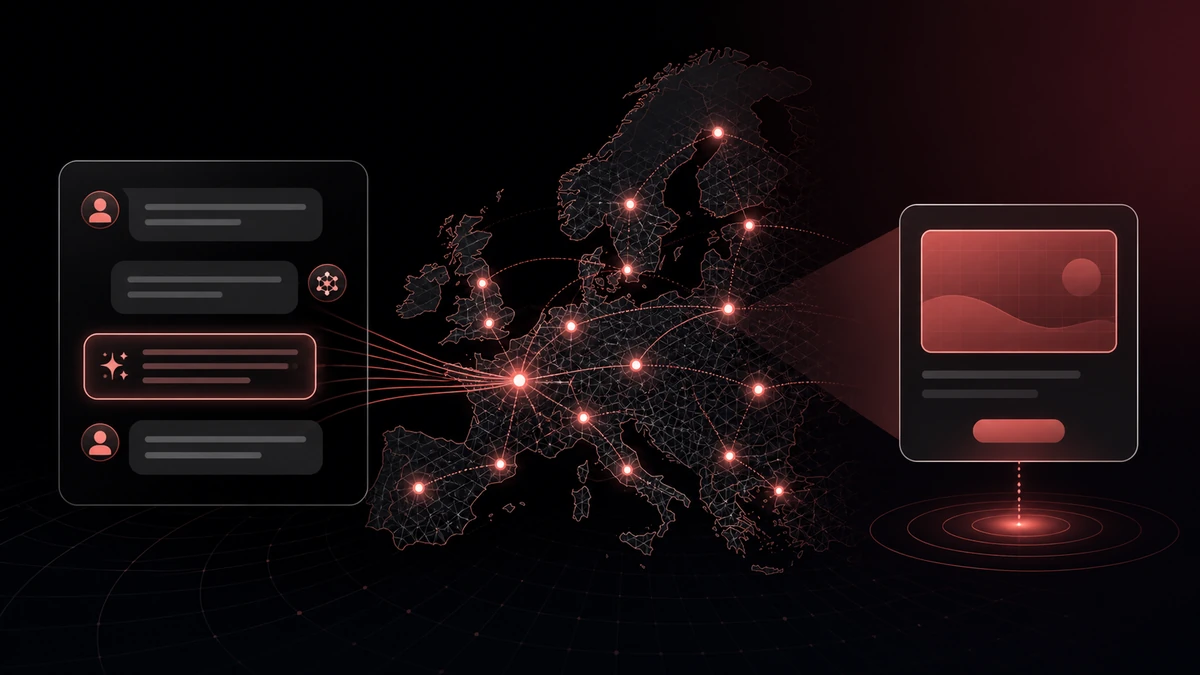
On 18 August 2026, OpenAI announced that ChatGPT Ads will expand to 31 European countries next week, including Germany, France, Spain, Italy, Sweden, Norway, Denmark, the Netherlands and Austria. It is the largest expansion since the US pilot opened in February, and the first time most European brands can buy a labelled placement inside the conversation where their customers are already making decisions.
Six months ago this was a US experiment. Today OpenAI says tens of thousands of marketers have advertised on ChatGPT, the platform supports conversion optimisation beyond CPM and CPC bidding, geo-targeting and custom audiences, and measurement runs through the OpenAI Pixel, a Conversions API and third-party integrations. Access in Europe will initially go through the OpenAI Ads Solutions team, agency partners and technology partners, with self-service through Ads Manager to follow later this summer. Ads will show only to users on the Free and Go plans; Plus, Pro and Enterprise stay ad-free.
For European marketers this is good news and a trap at the same time. Good news because a channel that was a slide in a strategy deck is now a line in the media plan. A trap because the instinct will be to treat it like paid search, bid on the obvious categories and read a visibility chart before and after. That is how a premium, limited inventory gets overspent on contexts a brand already owns, and underspent on the ones where it is absent.
That is why we are choosing this moment to make Meikai Ad Planner for ChatGPT officially available to every Meikai customer, standalone or on any monitoring plan, covering the 31 new European markets alongside the markets already live. This article explains what the expansion changes, what it does not, and what Ad Planner actually does.
Disclosure and method. Meikai is an AI visibility and advertising planning platform, so this is a vendor writing about a market it operates in. Everything stated about ChatGPT Ads comes from OpenAI's own announcement and published documentation at the time of writing; availability, formats and pricing move quickly and should be checked against OpenAI's current material. Meikai capability statements reflect what is documented on this site and in our MCP documentation at publication; roadmap items are identified as such. Where we describe a competitor, we link to that vendor's own public material.
What OpenAI actually announced
The announcement is short, and the important facts fit in a table.
| What changes | Detail, per OpenAI |
|---|---|
| Markets | 31 European countries, opening next week, including Germany, France, Spain, Italy, Sweden, Norway, Denmark, the Netherlands and Austria |
| Access | Initially through the OpenAI Ads Solutions team, agency partners and technology partners; self-service in Ads Manager later this summer |
| Who sees ads | Free and Go plan users only; Plus, Pro and Enterprise remain ad-free |
| Bidding | CPM and CPC, plus conversion optimisation towards business goals |
| Targeting | Context-based matching, with geo-targeting and custom audiences added since launch |
| Measurement | OpenAI Pixel, Conversions API and third-party measurement integrations |
| Scale | Tens of thousands of marketers have advertised on ChatGPT; this is the largest expansion to date |
Two things OpenAI restates matter more than the market list. Ads are clearly labelled and rendered separately from the answer, and advertising does not influence the answers ChatGPT gives. Conversations stay private from advertisers and customer data is not sold. Those principles are the reason the channel is worth buying: people trust the answer, and the ad sits beside it.
What has not changed, and why it matters more in Europe
The expansion changes where you can buy. It does not change how the buy works, and the mechanics are what most European teams have not yet had to deal with in production.
Targeting is not keywords. ChatGPT ad groups are matched through context hints, natural-language descriptions of the buyer situation in which your ad belongs. OpenAI's own definition says they guide matching, are not exact-match and do not guarantee delivery. A person does not type "best luxury watch". They explain that it is a first serious purchase, that they want something they will still wear in twenty years and that they are choosing between three maisons. A hint that captures that situation wins the relevance weighting; a keyword list reworded into sentences does not. Our guide to context hints goes into the mechanics.
The auction is relevance-weighted. OpenAI describes a relevance-weighted second-price auction. The highest bid does not automatically win; the bid is multiplied by a relevance score computed across the context hints, landing page, ad title and ad copy. A precise hint can beat a bigger budget.
Inventory is limited and premium-priced. Opening 31 markets increases the surface, not the density. Ads still serve only to free-tier users and only in conversations the platform judges relevant. That puts the weight on choosing the right contexts rather than on outbidding the category.
Paid spend cannot earn an organic citation. OpenAI states that advertising does not influence ChatGPT's organic answers. A citation means the model reached for your content while composing an answer; an impression means you bought a slot. They should share one plan and never share one score, a point we laid out in our GEA platform comparison. Europe makes this sharper, not softer: many European brands are strong organically in their home market in ChatGPT and weak in neighbouring ones. Buying the same contexts everywhere wastes the first and under-serves the second.
Measurement is still early. The IAB's Measuring Visibility in the AI Era framework, published this month, scopes itself to organic visibility and flags standardised paid measurement as an urgent adjacent gap. Until that gap closes, the discipline is on the advertiser: take the paid numbers from the ad platform and do not read a campaign off an organic visibility chart that moves for unrelated reasons. We wrote about that framework and where Meikai stands against it.
Why we are releasing Ad Planner now
Meikai built Ad Planner for ChatGPT on one conviction: great GEA campaigns start with great GEO data. Since the spring it has been live with a group of customers and partners in the United States, the United Kingdom and the first Asian markets, used on real flights and refined on real feedback. With Europe opening next week, it is available to every Meikai customer.
The reason to release it now rather than later is simple. The first months of a new ad market are when the expensive mistakes get made, and when a brand that plans carefully can take positions in contexts its competitors have not yet noticed. We would rather our customers walk into the European auction with a plan than learn the channel the hard way.
What Ad Planner does
Ad Planner is built as the paid extension of a GEO programme, not as a separate media tool. It reads the same monitored ChatGPT responses, the same prompt model and the same organic measurement that the rest of the platform runs on. Four jobs, in order.
| Job | What Ad Planner does |
|---|---|
| Opportunity selection | Ranks the topics and buyer intents where ChatGPT answers already trigger ads, built from your monitored responses across topics, funnel stages and personas. Each opportunity is scored on observed ad penetration and your organic visibility gap. |
| Classification | Every opportunity gets one of four actions. Buy ads where competitors show and your organic presence is weak. Defend where you are strong but exposed to competitors buying against you. Organic first where the cheaper fix is on-site and off-site optimisation. Monitor where it is not yet worth either. The output is a budget allocation with a stated reason per line, and some lines say do not spend. |
| Ad group builder | From any opportunity, Ad Planner drafts a launch-ready ChatGPT ad group following OpenAI's best practices: context hints in real buyer language generated from your monitored prompts and category context, a suggested maximum bid informed by how strong your organic presence already is, and chat card ads grounded in your real products. Every field is editable. Export is a ready-to-upload CSV. |
| Lift measurement | Paid delivery is reported from the ad platform. Organic movement is measured separately on the same prompt model used to plan the buy, so a flight is never scored against a visibility chart that moved for reasons that have nothing to do with media. |
Underneath sits the data that makes the scoring honest: daily monitored ChatGPT responses per brand and market, alongside Meikai’s current production panel aggregate, which contains more than 1.5 billion question-and-answer messages. We use this evidence to check whether the contexts we recommend reflect what people actually ask.
What is included in the release
Here is what changes for customers and partners from this week, stated precisely.
| Item | Status |
|---|---|
| Ad Planner for ChatGPT | Officially available to every Meikai customer, standalone or as an add-on to any monitoring plan |
| Market coverage | The 31 European markets opening next week, alongside the United States, Canada, Australia, New Zealand and the markets currently rolling out (United Kingdom, Japan, South Korea, Mexico, Brazil) |
| Ad group builder | Context hints, suggested max bid, chat card ads, editable fields, CSV export |
| Activation | Through your own OpenAI Ads account, your agency or an OpenAI technology partner; Meikai does not sell the inventory and takes no commission on media |
| Direct push to OpenAI Ads | On the roadmap, targeted for September: connect Meikai to your OpenAI Ads account and push drafted ad groups without the CSV step |
| Google AI Mode and AI Overviews planning | Next on the roadmap, same demand model, different execution layer |
| Data access | Ad Planner outputs available through the Meikai API and MCP server, included in the licence |
What this means for European marketers this quarter
Three practical recommendations, the same ones we give our own customers.
Start from your organic map, not your category list. Before you brief an agency or open Ads Manager, know where ChatGPT already recommends you in each European market and where it does not. That map decides where an ad is additive and where it pays to appear next to an answer that names you anyway.
Write context hints from real prompts. The single most expensive mistake in this channel is a keyword list turned into sentences. Hints should describe the person, the intent and the constraint that makes your product the right answer. If you cannot see the real prompts in your category, you are writing them blind.
Measure the ads, not your visibility score. Take impressions, clicks, CPC and conversions from OpenAI. If you want an organic read, hold back a random share of prompts per theme and compare them with the ones you ran. A before-and-after chart is not a measurement plan, and the first European flights will be scrutinised by CFOs who have never seen this channel before.
If you want to see Ad Planner on your own brand and markets before the European auction opens, talk with our team. We will show you the contexts we would buy, the ones we would defend and the ones we would leave alone, with the monitored answers behind every line.
Method and sources
Facts about ChatGPT Ads come from OpenAI's announcement of 18 August 2026 and OpenAI's published advertising documentation, read at publication. Meikai capability statements reflect what is documented on this website and in our MCP documentation at publication; roadmap items (direct push to OpenAI Ads, Google AI Mode and AI Overviews planning) are identified as such. The citation figures cover a fixed cohort of 126 monitored brands from March to July 2026, measured as citations per 1,000 platform responses; full method and limits sit in the linked analysis. This is a vendor's article about a market it operates in, not an independent benchmark.
- OpenAI: ChatGPT Ads expands across Europe, 18 August 2026
- OpenAI: Our approach to advertising and expanding access
- IAB: Measuring Visibility in the AI Era, August 2026
- Meikai: IAB AI visibility framework, what it means for GEO
- Meikai: Best GEA platforms in 2026
- Meikai: How Meikai helps brands win at prompt-targeted advertising on ChatGPT
- Meikai: LLM citation decay analysis
- Meikai advertising and Meikai MCP documentation
Frequently asked questions
When do ChatGPT Ads launch in Europe?
OpenAI announced on 18 August 2026 that ChatGPT Ads will expand to 31 European countries the following week, including Germany, France, Spain, Italy, Sweden, Norway, Denmark, the Netherlands and Austria. Access is initially through the OpenAI Ads Solutions team, agency partners and technology partners, with self-service through Ads Manager to follow later this summer.
Who sees ads in ChatGPT?
Per OpenAI, ads are shown only to users on the Free and Go plans. Plus, Pro and Enterprise subscriptions remain ad-free. Ads are labelled, rendered separately from the answer and do not influence ChatGPT's organic responses.
How does ChatGPT ad targeting work?
ChatGPT ad groups are targeted with context hints, natural-language descriptions of the buyer situation in which your ad should appear. They replace keywords entirely. OpenAI describes the auction as relevance-weighted and second-price: bids are weighted by a relevance score computed across context hints, landing page, ad title and ad copy.
What is Meikai Ad Planner?
Ad Planner is Meikai's planning and optimisation layer for the in-LLM placement in ChatGPT. It ranks the buyer intents where ads already trigger, scores each on ad penetration and your organic visibility gap, classifies it as Buy ads, Defend, Organic first or Monitor, then drafts a launch-ready ad group with context hints, a suggested max bid and chat card ads, exported as a CSV. Lift is measured separately from auction delivery. It is available to every Meikai customer, standalone or on any monitoring plan.
Does Meikai sell ChatGPT ad inventory?
No. Meikai does not sell or fill the inventory and takes no commission on media. Campaigns are activated through your own OpenAI Ads account, your agency or an OpenAI partner. Meikai sits beside the advertiser as the independent planning and measurement layer.
Can I measure a ChatGPT Ads campaign against my AI visibility score?
Not reliably. Organic visibility moves for reasons unrelated to advertising. In a cohort of 126 brands Meikai tracked from March to July 2026, one change to a set of cited source pages cut ChatGPT citations per 1,000 responses from 166.1 to 20.2 while Perplexity held at 109.5% of its baseline. Take paid numbers from the ad platform and, for an organic read, compare held-back prompts with the ones you ran.